
How to Get Better Sleep: 5 Ways to Reset Your Circadian Routine
If you've ever googled "how to sleep better" at 3.33am... Welcome! You're in good company.
3 MIN READ
If you've ever googled "how to sleep better" at 3.33am... Welcome! You're in good company.
It's 2026. Most of us are glued to technology, overstimulated and stressed – which is pretty much the worst recipe for a good night’s sleep.
Doctors and wellness experts love to tell us how crucial quality sleep is for our health and productivity. We hear that without 7 hours a night, we can’t function properly. We hear that poor sleep affects everything and can shave years off our life expectancy. Well, that sounds extremely stressful! Great. We’re supposed to minimize stress to get better sleep! Now we’re even more stressed at bedtime about NOT getting enough sleep.
Introducing: sleep anxiety. Now we’re staring at the ceiling thinking about work deadlines, family responsibilities - and also spiraling about how bad we are at sleeping.
At AKA Labs, we’re big on the science of sleep and we’ve compiled a few tips on how to make bedtime a sweet dream.
1. Fall Asleep Faster and Wake Up Actually Rested
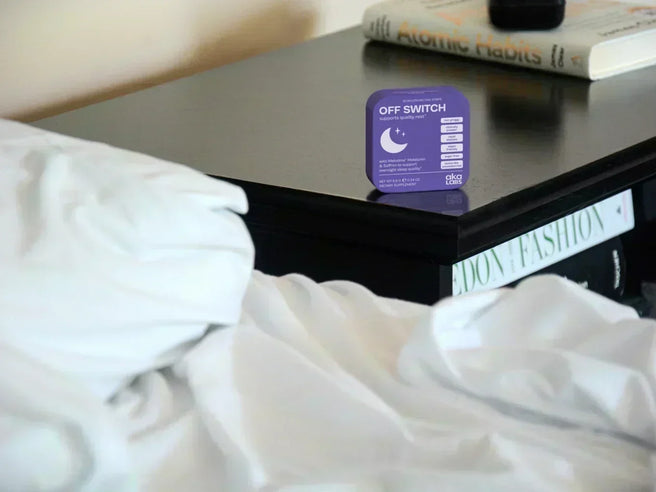
AKA Labs has a safe, easy dissolvable oral-dissolving strip called OFF SWITCH, that melts on the tongue and delivers sleep-inducing Tart Cherry and slow-release Melotime® Melatonin directly to your body via your mouth’s oral mucosa. Genius. R.E.M, here we come!

R.E.M, here we come!
2. Devices Down: Building a Better Bedtime Routine
Scrolling "for just five minutes" somehow always turns into dissecting a true crime timeline. Phones, tablets, and TVs don't just steal your time, they keep your brain engaged when it's trying to wind down.

They also emit blue light which can send a signal to your brain that it's daytime.
Giving yourself 30–60 minutes of screen-free time before bed tells your brain it's okay to shift into sleep mode.
3. White Noise: Why Constant Sound Might Be Hurting Your Sleep
White noise creates a steady, soothing background baseline that helps cover up nighttime noise pollution like traffic, family members yapping, dogs barking or that one neighbor who decided to rearrange their furniture at midnight.
Whether it's a fan, white noise machine, rainfall sounds, or gentle ocean waves, consistent background noise can help your brain ignore distractions and stay asleep longer.
4. Watch Out for Sneaky Stimulants: What’s Secretly Wrecking Your Energy
Coffee and energy drinks close to bedtime are an obvious no-no. But some stimulants are a little more insidious, and they hide out in places we wouldn’t think to associate with sleep interference.
Caffeine and other stimulating ingredients like guarana, ginseng or even Vitamin C, can also show up in:
-
Certain teas
-
Chocolate
-
Some sodas
-
Pre-workout supplements
-
Energy bars
-
Some medications and pain relievers
-
Certain vitamins
If sleep has been a struggle, check the ingredients of what you’re consuming close to bedtime. Try moving stimulants earlier in the day and see if it makes a difference.
5. Keep It Cool: The Ideal Bedroom Temperature for Deep Sleep
Your body naturally lowers its temperature as you prepare for sleep. A bedroom that's too warm can interfere with that process, leaving you tossing, turning, and flipping your pillow to the cool side every ten minutes.
Most people sleep better in a cool room.
You don’t need to set the A/C to arctic mode, just aim for a temp that's comfortably cool rather than cozy and warm.

Most importantly, try not to spiral about sleep. Instead of stressing about getting a perfect 8 hours sleep every night, focus on creating the conditions that make good sleep more likely.


